Will My Old Panels Fit a New Sub-Zero?
Written by
Elena Sandoval
Refrigeration technician — cabinet, door and seal work · 24 years in the trade
Checks seal geometry and door closure first on a warm-cabinet call. A unit fighting a poor seal all day makes the sealed system read badly, and the readings only mean anything once the door is closing the way it was built to.
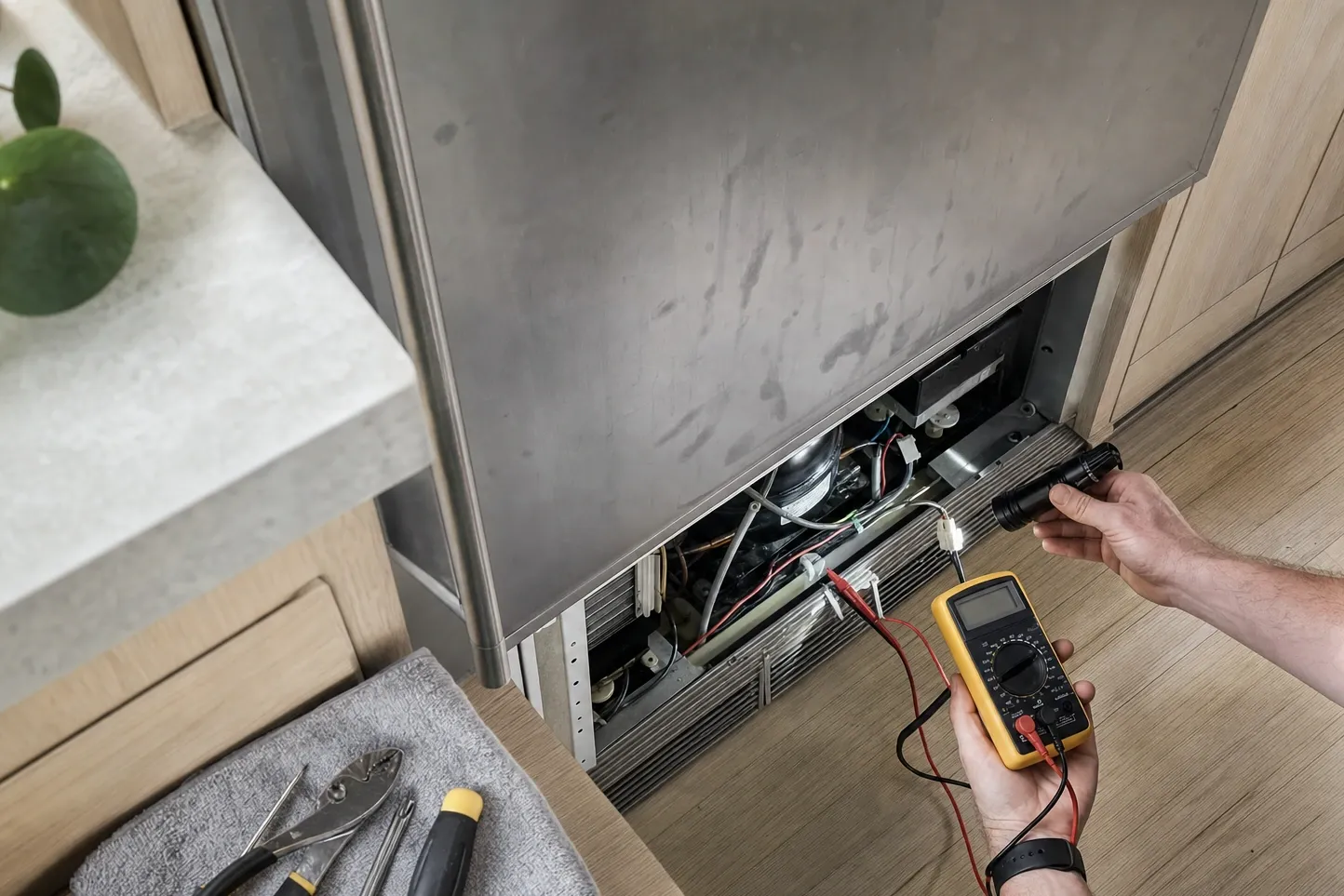
This comes up most often when a cabinet has reached the end of its life and the kitchen around it has not. The joinery is in good order, it matches thirty feet of cabinetry nobody wants to touch, and it would be a pity to skip it. The question is sensible and it deserves a proper answer rather than an optimistic one.
Why nobody can answer this over the phone
Because a panel does not fit a brand. It fits a particular door, on a particular model, hung a particular way. Two cabinets of identical width can carry fronts of different heights, use different fixing arrangements and allow different weights, and any one of those three will stop a reuse dead. Anyone willing to say yes without seeing figures is guessing, and it is your cabinetmaker who pays for the guess.
The four things that have to agree
- The opening. The hole in the run has to suit the new cabinet, with the ventilation clearances the specification asks for. This is about the appliance, not the panel, but it comes first because nothing else matters if the machine will not go in.
- The panel size. Height and width of the front as your kitchen needs it to read, against the front size the new model expects. A front that is too small leaves a line that cannot be hidden; too large and it fouls whatever is beside it.
- The fixings. How your front is held on, and whether the new door provides the same arrangement in the same places. This is where most reuses fail, and it is the hardest thing to tell by eye.
- The weight allowance. Your existing joinery weighs what it weighs. The new model permits what it permits. Those two numbers have to be compared, not assumed.
Like for like is the easy case
Replacing a cabinet with the current version of the same configuration is the reuse most likely to work, because the layout it was designed around has usually been kept. It is still worth checking all four items above, but the odds are good.
Changing configuration is a different matter. Going from a single wide cabinet to a pair of columns, or from one door arrangement to another, changes the shape of what the fronts have to be. Existing panels rarely survive that intact, and a kitchen that was planned around one appliance shape seldom absorbs a different one without the joinery being reworked.
What to measure and photograph first
Before you ask anyone anything, spend a quarter of an hour gathering this:
- Height, width and thickness of each existing front, measured rather than remembered.
- The finished opening in the cabinetry: width, height and depth.
- A straight-on photograph of the run, and one of each front from the side.
- The back of a front if you can see it without removing anything, showing how it is fixed.
- The model designation of the cabinet you have now, and of the one you are considering.
That folder makes every subsequent conversation short. If you want a second pair of eyes on what the appliance side of it actually requires, Sub-Zero Repair Service Los Angeles is on (310) 499-2240 and the $89 visit puts a technician in front of the existing installation rather than in front of a description of it.
What this page will not tell you
Whether you should replace the cabinet at all. That is a judgement about the machine, its age and what it would cost to put right, and it deserves its own conversation with whoever knows the condition of your unit. This page answers the narrower question people usually mean when they ask it: if a different cabinet does arrive, can the fronts you already own go onto it. Measure the four things above, and you will know.
Follow-ups
- The new cabinet is the same width. Does that settle it?
- It is a good start and it is not the whole story. Width tells you the appliance will go into the opening; it says nothing about how tall the door is, where the fixings land or how much your joinery weighs against what the new model allows. Four things have to agree, not one.
- Can a panel be cut down or built up to suit?
- A cabinetmaker can do a great deal, and whether it is worth doing depends on the front. A flat veneered slab takes alteration reasonably well. A framed panel, a moulded face or anything with a grain pattern running across it tends to show the work afterwards, which rather defeats the purpose.
- Who should measure — me, the retailer or the installer?
- Take your own figures first so you are not relying on anyone else remembering. Then have the installer confirm them against the specification for the model in question before an order is placed. Two independent sets of numbers agreeing is worth considerably more than one confident assurance.